Aerodynamics as a Software Engineer??? Part 2

→ New here? Read Part 1 first: Aerodynamics as a Software Engineer??? Part 1
I stood in the lab, staring at my 3D printed duct sitting perfectly on the system.
The fans hummed.
The CEO circled the box like a shark.
My hands wouldn't stop trembling.
This is it. Either I'm a genius or I'm about to look like an idiot in front of the entire company.
But let me rewind. Because the road to get here? Absolute chaos.
The Calm Before The Storm
January 12, 2026
I ended that day with my notebook covered in drawings, calculations, scribbles that probably only I could understand.
I prepped a document with all my test results about the duct.
Presented my findings to my managers.
Closed my eyes. Took a deep breath.
Then went home.
The next 3 days were simple:
- White monsters on my desk
- Production-ready features getting shipped
- And every developer's favorite activity - debugging those red error lines filled with nonsense numbers
Easy week. Peaceful.
But Friday had other plans.
Friday, January 16
TUH, TUH, TUH TUUUHHHM.
Got to work early.
The sun was barely up. Actually, scratch that - there was a massive snowstorm, so no sun at all.
The birds were chirping. Not really.
My white monster sat on my desk, looking way too tasty.
I opened my laptop, connected my monitor, ready for a normal day.
Then my manager walked in.
"We decided we're not sending the system to our client until next week. I thought it would be a great idea to 3D print your duct and install it before we ship. I already contacted a 3D printing company. They're just waiting for the file."
My brain processed this slowly.
Perfect. That sounds cool.
But then it hit me.
Wait. Who's creating the model?
ME?
The excitement drained from my face.
"Does that mean I have to create the model and send it TODAY?"
"Well, that would be nice. They said they can print it in roughly 3 hours."
My chest tightened.
And no, it wasn't from the caffeine.
The Model
Here's the thing about AutoCAD.
It's not bad when you're working with simple shapes. Squares. Circles. Maybe a cone if you're feeling spicy.
But when all those forms need to merge into one smooth piece with perfect alignment?
Pain.
Pure pain.
And WHY does a software engineer need to learn how to build mechanical parts anyway?
But whatever. I sat down. Mentally prepared myself.
Then I realized - my laptop doesn't have AutoCAD. And my company isn't a mechanical drawing company, so they don't have it either.
So I found this web program called OnShape. Free. Online. Does the same thing.
Honestly? Better than AutoCAD. No $360/month subscription.
I grabbed all my measurements from the fans and the box. Started building.
My measurement notes looked like this:
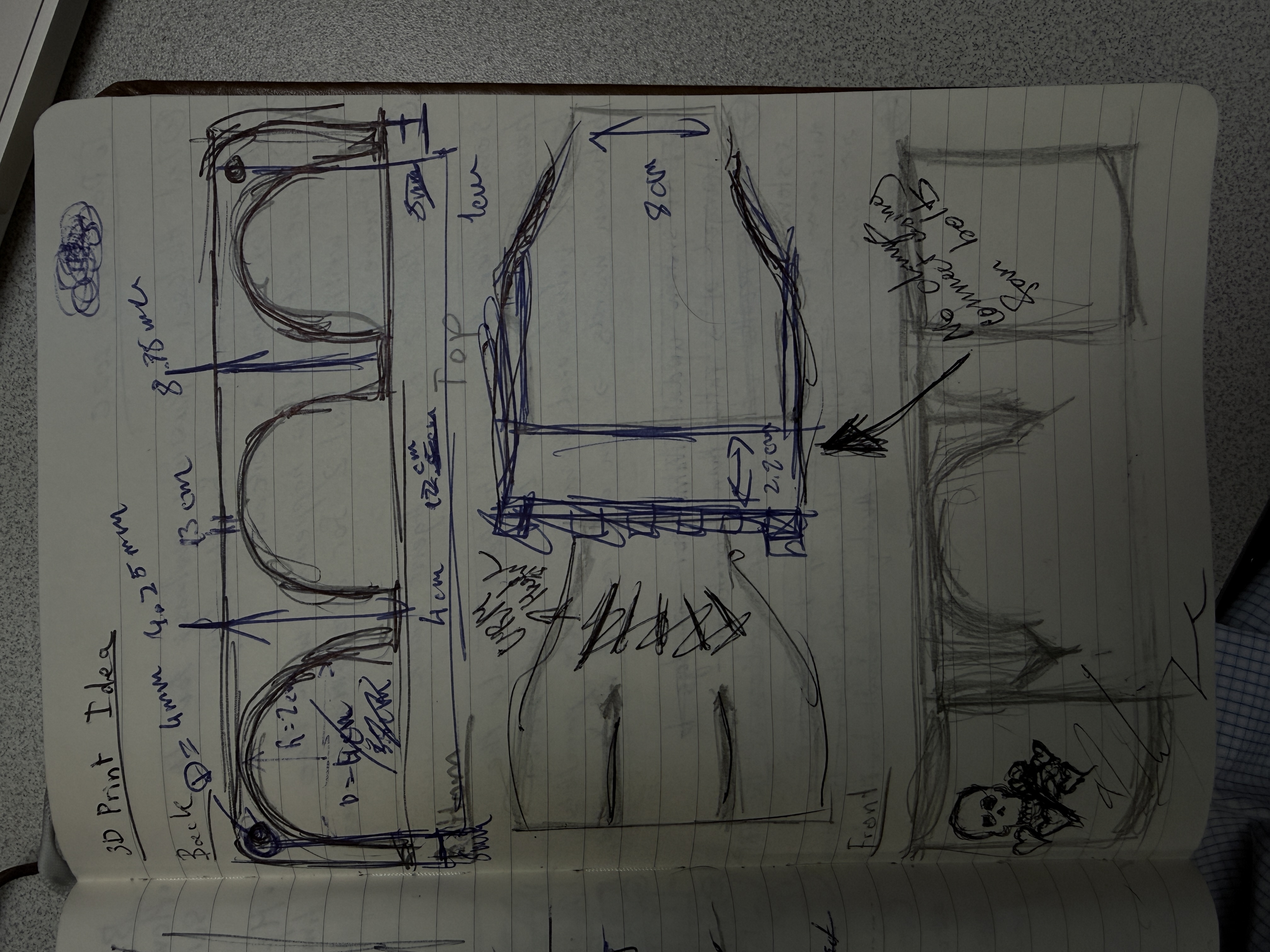
Yes. As you can see by my drawings, I was slowly losing my mind measuring everything 30 times.
But once I got back to the desk with all my numbers?
Something shifted.
I don't know if it was the calm music in my ears. Or just the acceptance of the pain I'd already gone through.
But modeling that duct felt... peaceful.
I sat there for 6 hours. Drawing. Adjusting. Refining.
And when I finished?
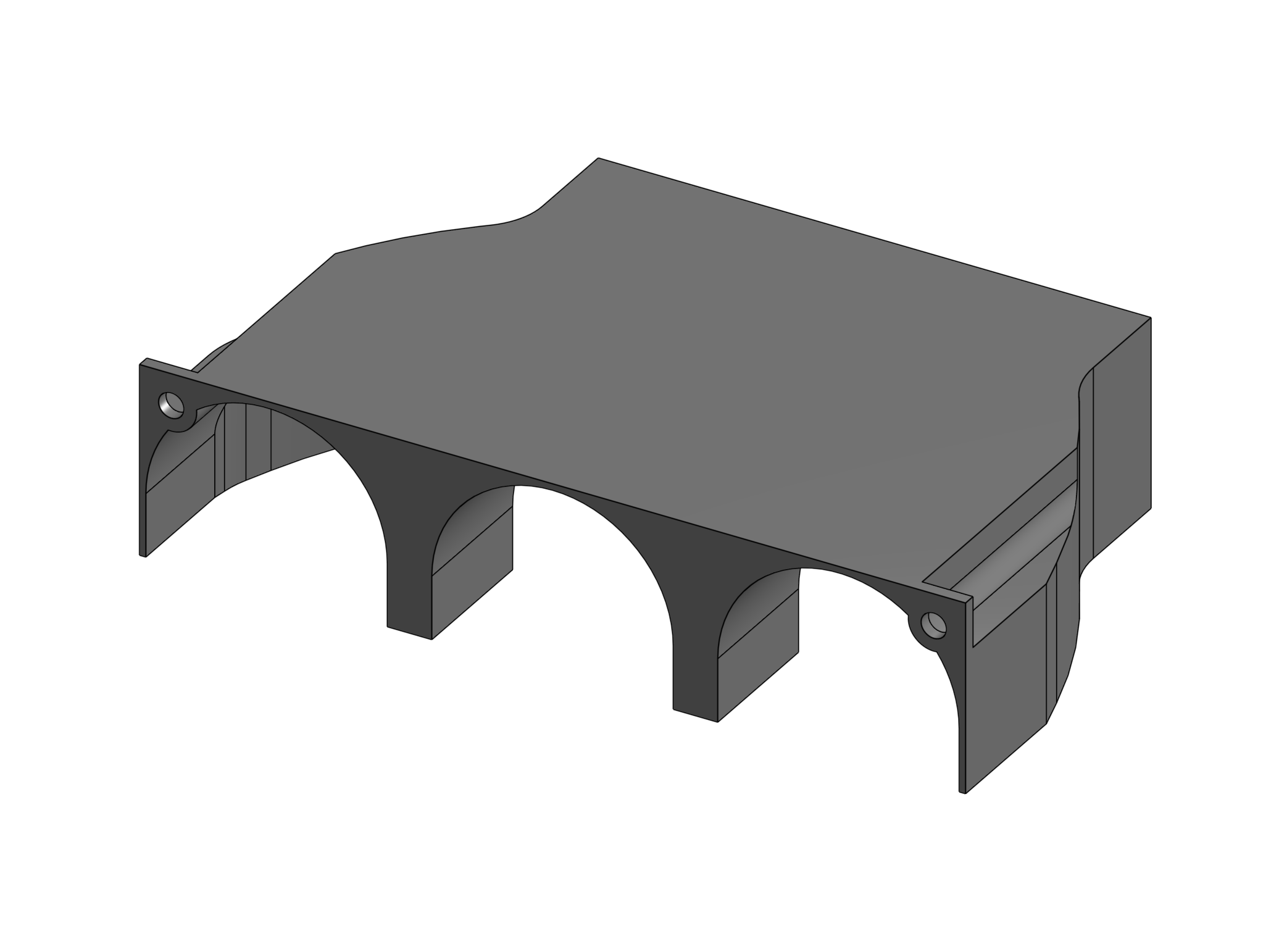
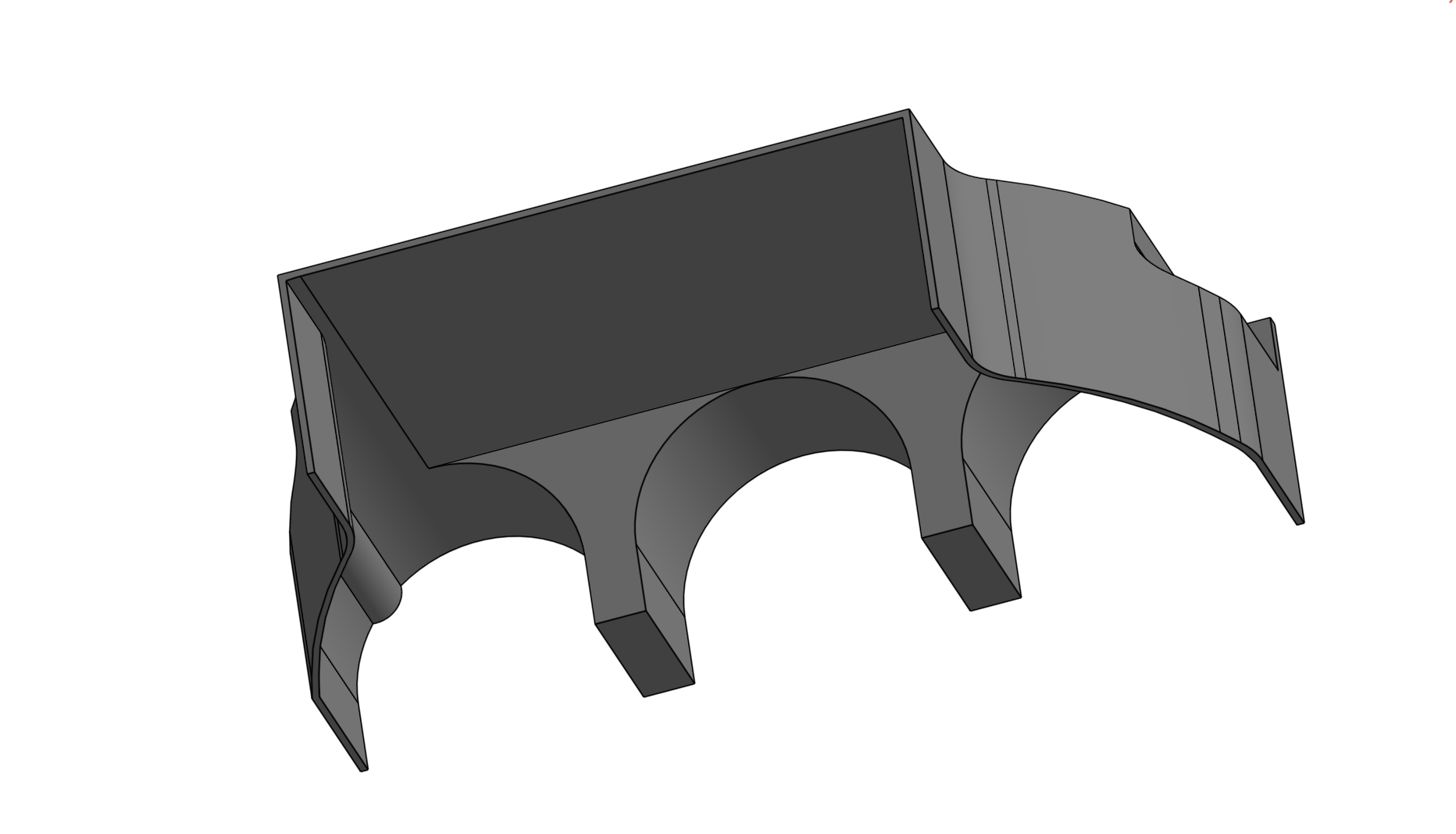
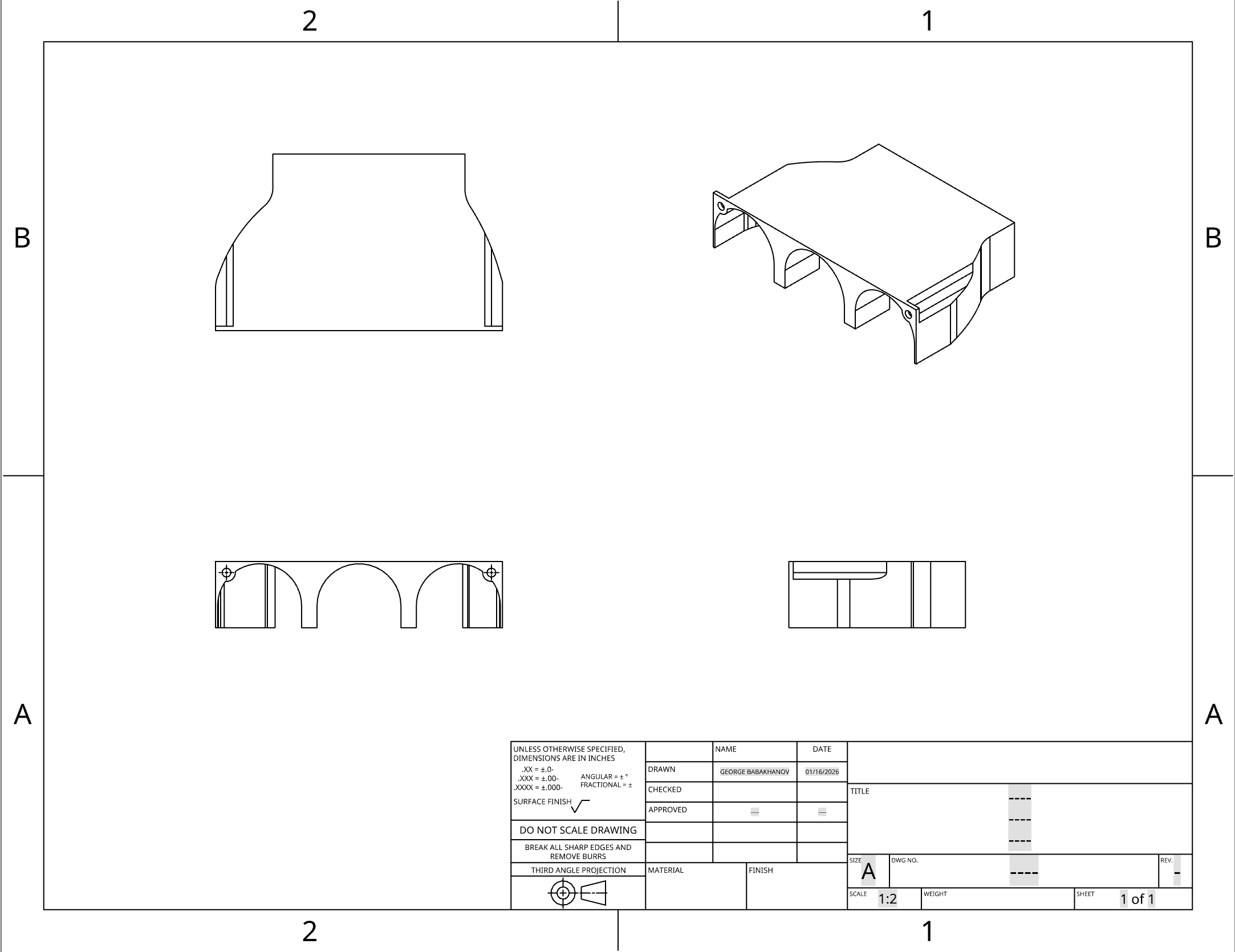
The final 3D model created in OnShape - multiple angles and the full technical drawing.
I triple-checked my measurements.
Triple-checked the drawing.
Triple-checked my sanity.
Took a deep breath. Hit send on the email with the 3MF file.
Then I just closed my eyes for a minute.
The drive home that night was the most peaceful drive I've ever had. Just me. Silence. And the relief that the file was out of my hands.
The Weekend
For some reason, I couldn't stop thinking about the print.
Like it was my baby.
Sunday afternoon, I texted my manager.
"What's happening with the print?"
His response:
"Print is ready. If you want, pick it up tomorrow morning before work. I'll send the address."
Two feelings hit me at once:
-
I get to miss 30-60 minutes of work because I have a "mission" to complete. I felt like a king's soldier in the 1800s sent on a special assignment.
-
My baby was ready.
Though one worry stayed in my head.
What if it doesn't fit?
But that was tomorrow's problem.
Monday Morning - Nothing Is Perfect
Everything started smooth:
- Picked up the printed parts
- Drove to the office
- Pulled the duct out of the plastic bag
The edges looked clean. The first test fit on the fans? Perfect.
This is actually going to work.
We decided to connect everything. Attach it with bolts. Run a test.
But here's the issue.
I completely forgot about the middle bolts.
I created holes for the corner bolts.
But the middle bolt heads were sticking out. My front panel was flat. The bolts wouldn't let the duct sit flush against the fans.
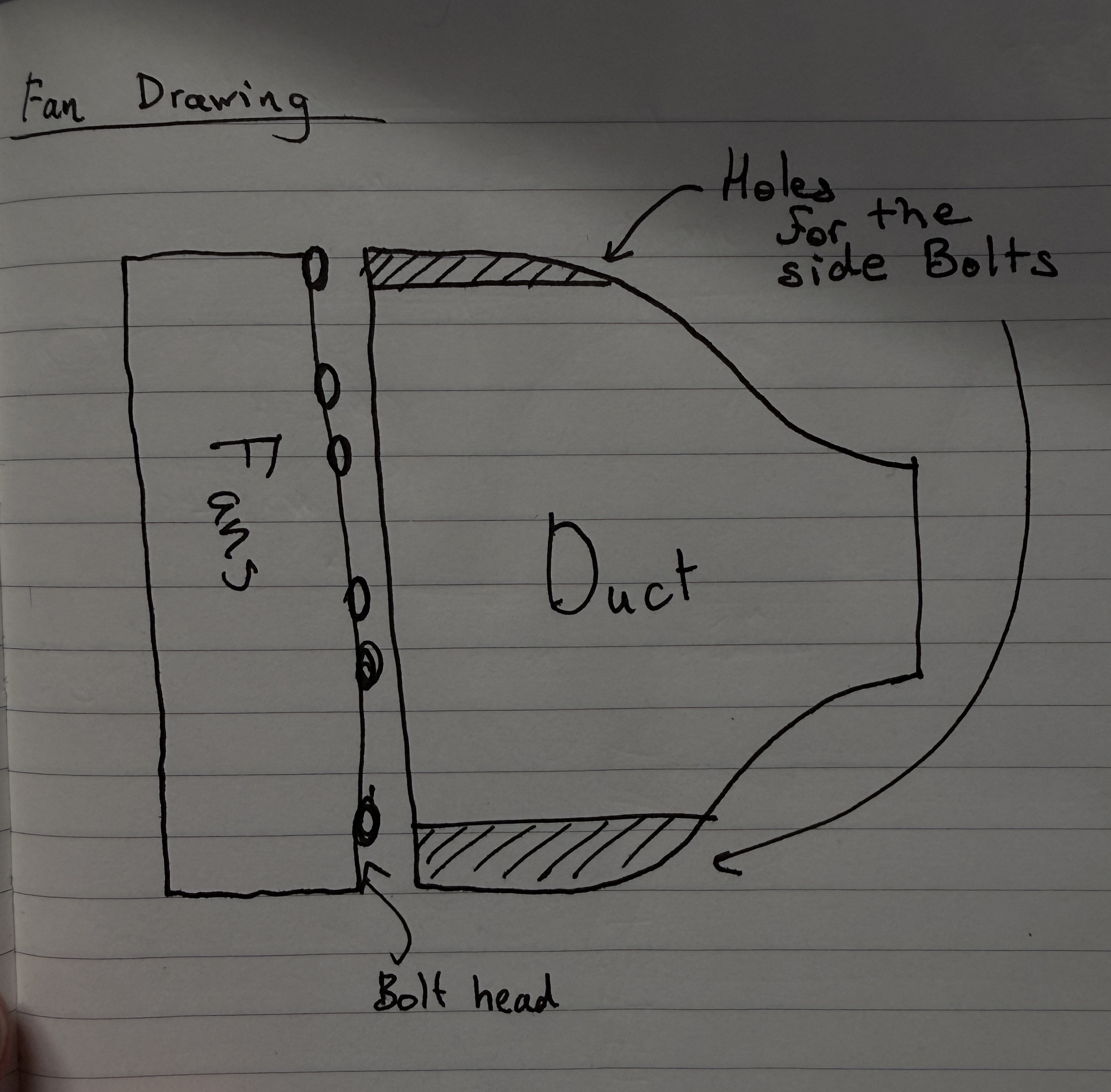
My drawing explaining why the bolt heads were causing a gap.
The solution? Drill holes for each bolt head so they could sink in.
Simple.
Except I drew the lines wrong.
So when I drilled... the holes didn't align with the bolts.
Of course.
Now I had holes in the wrong spots. And the spacing was too tight to drill new ones next to them.
So the backup plan: drill all the way through, creating one long channel for the bolt heads.
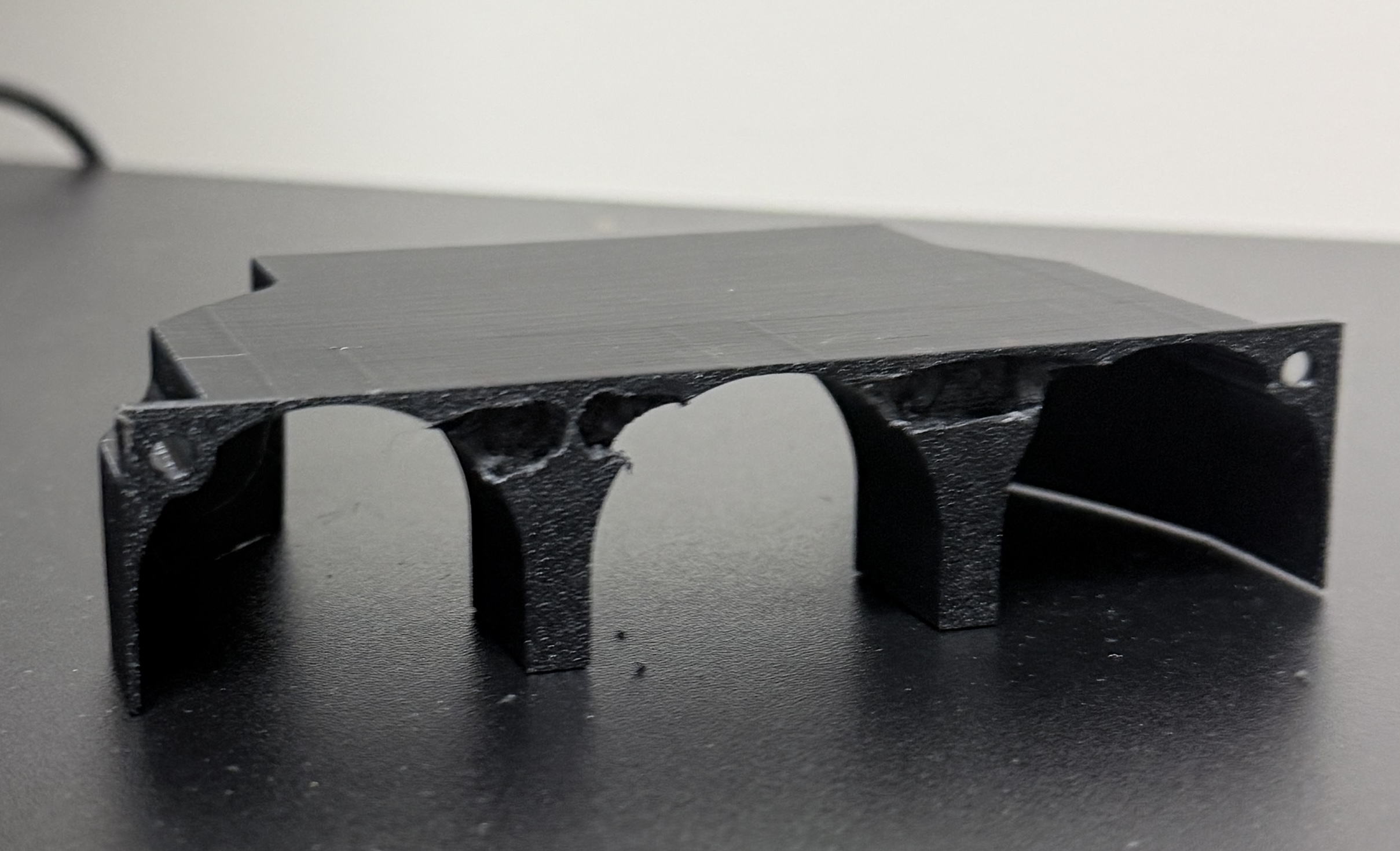
The ugly but functional channel fix for the bolt heads.
Ugly? Yes.
But it worked.
The duct sat firm. The bolts were inside. Everything was sealed and ready.
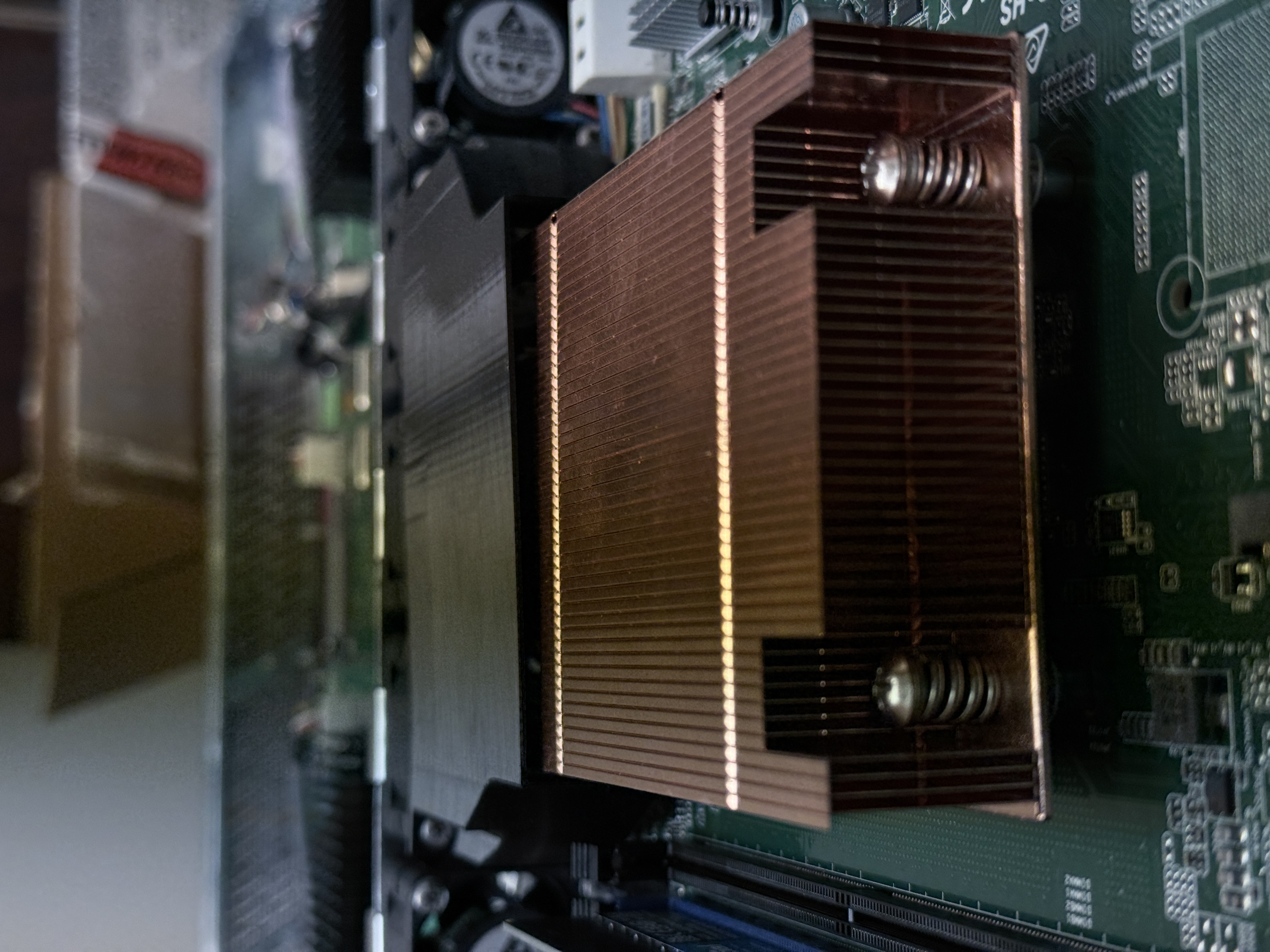
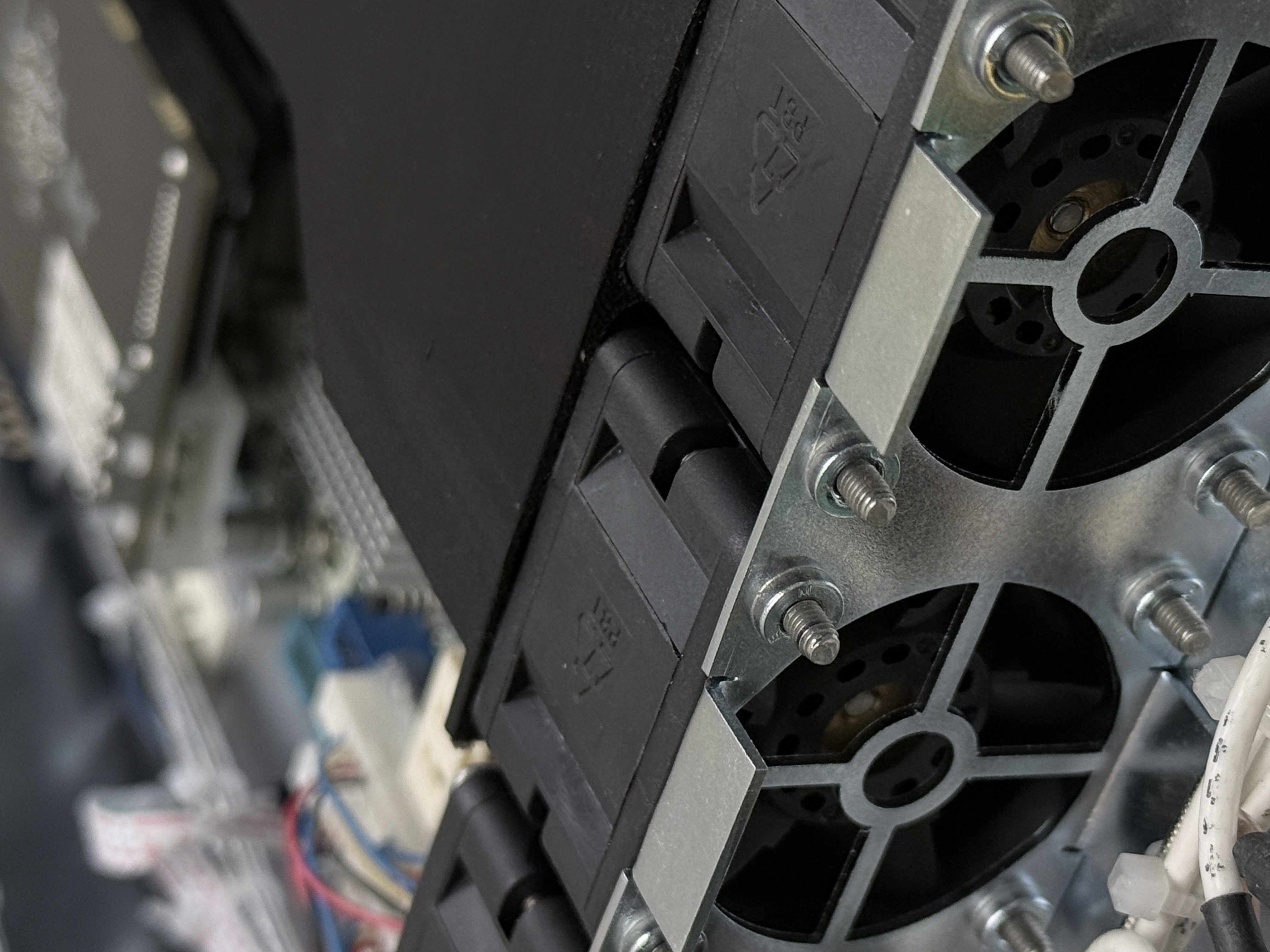
The 3D printed duct installed and ready for testing.
The Final Test
Duct in place.
Bolts secured.
Cover on.
My manager reached for the power switch.
The system turned on.
And the lab went quiet.
Not normal quiet.
Actually quiet.
We looked at each other. Stood up straight. Started smiling.
Because we could hear each other talk. In normal voices. While the system was running.
Before? We had to yell.
Now? We could whisper.
This was everything we hoped for.
The plastic duct performed even better than the cardboard prototype.
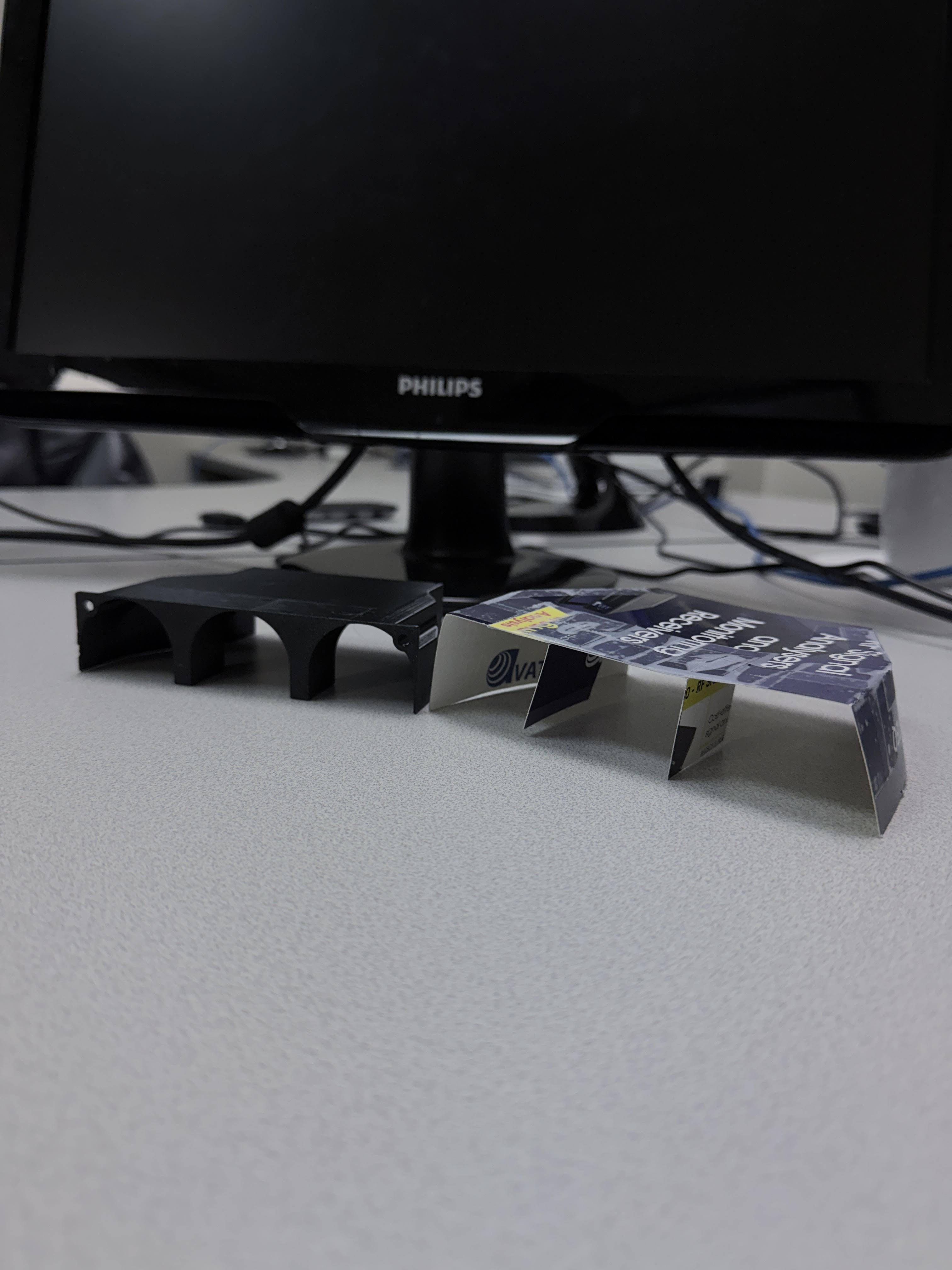
The cardboard prototype next to the final 3D printed version - quite the upgrade.
The Results
| Metric | Before | After |
|---|---|---|
| CPU Temp | 82-88°C | 69-71°C |
| FSC_Index | 79°C | 73-74°C |
| Sound Level | Max 88.3 dB, Avg 77.6 dB | Max 76.6 dB, Avg 75.2 dB |
| Output Air | No warmth leaving the box | Actually warm air flowing out |
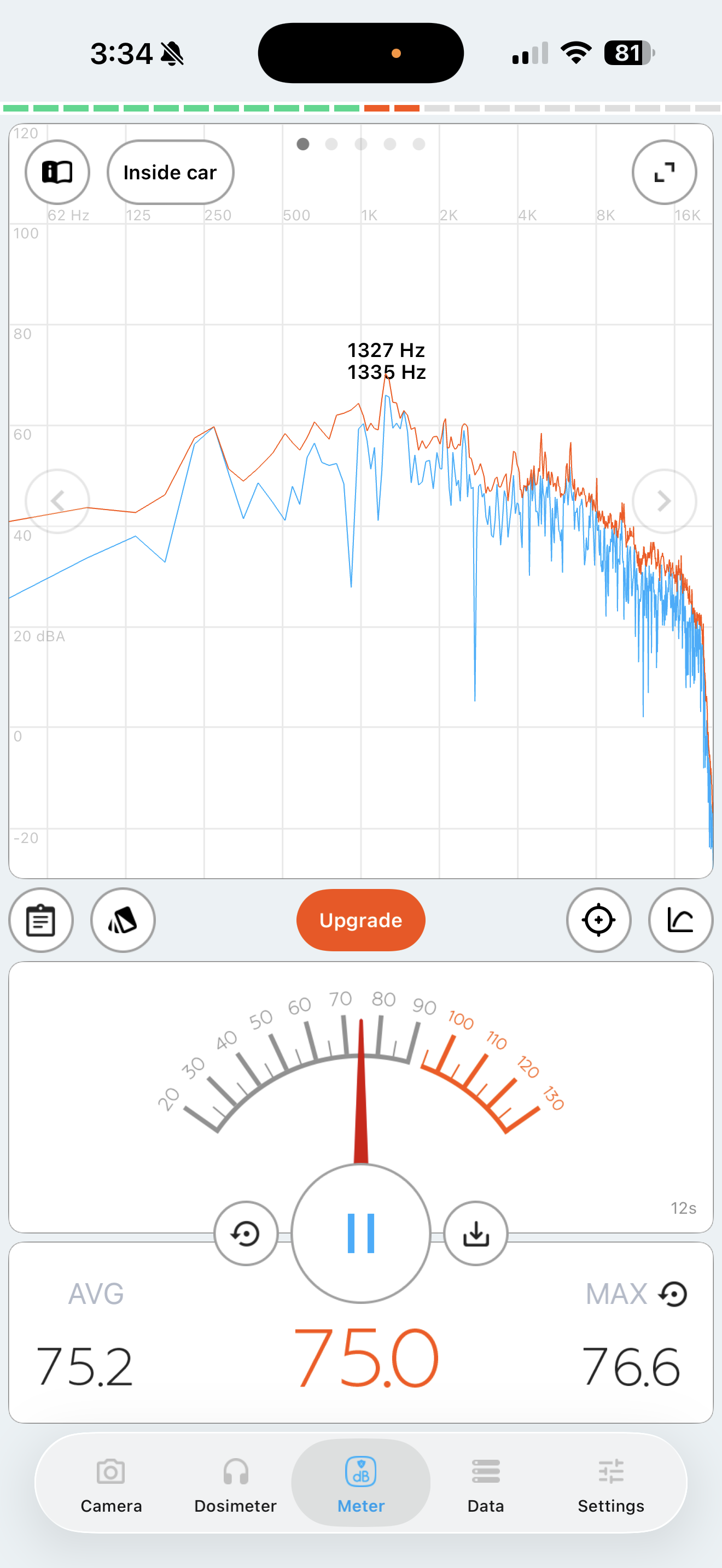
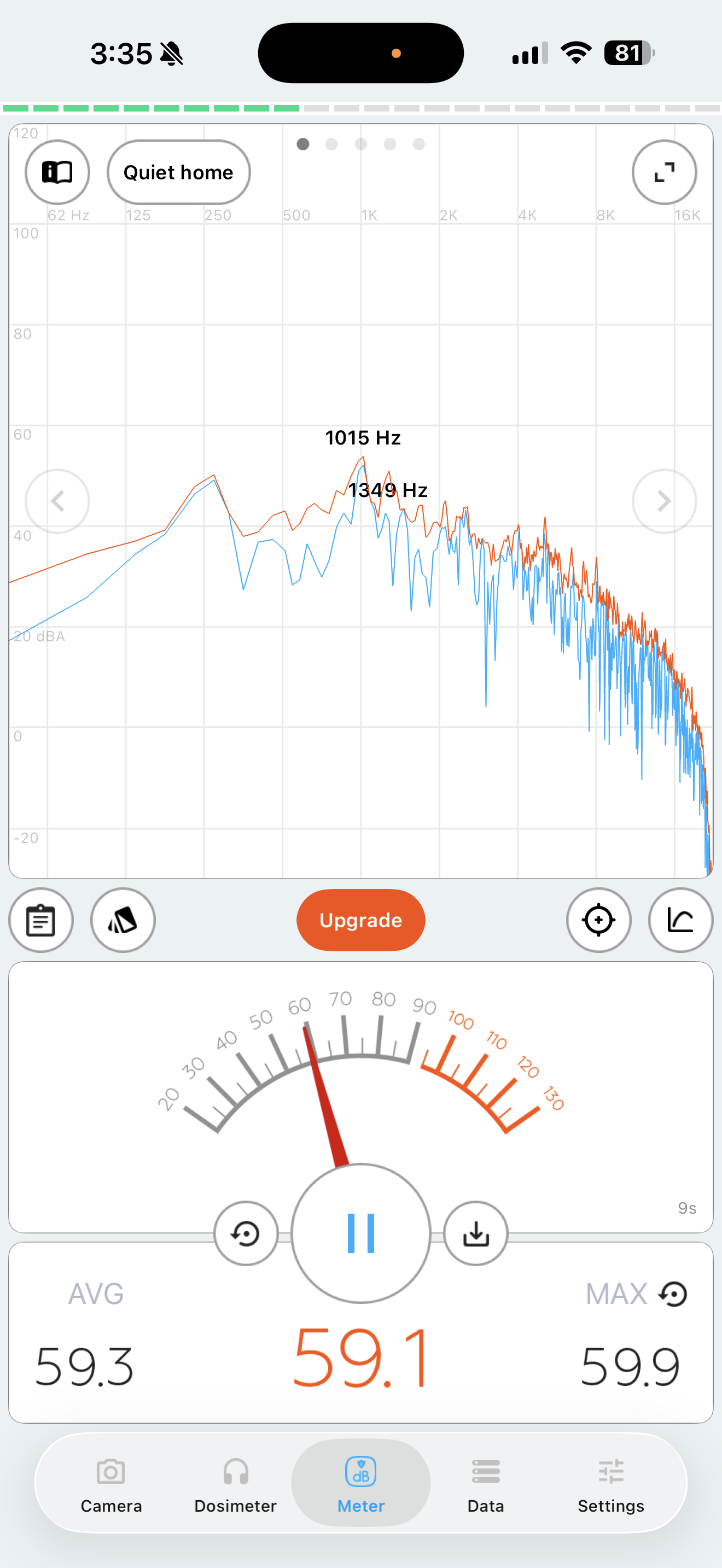
Sound measurements with the final duct. Left: right next to the system. Right: 2 meters away.
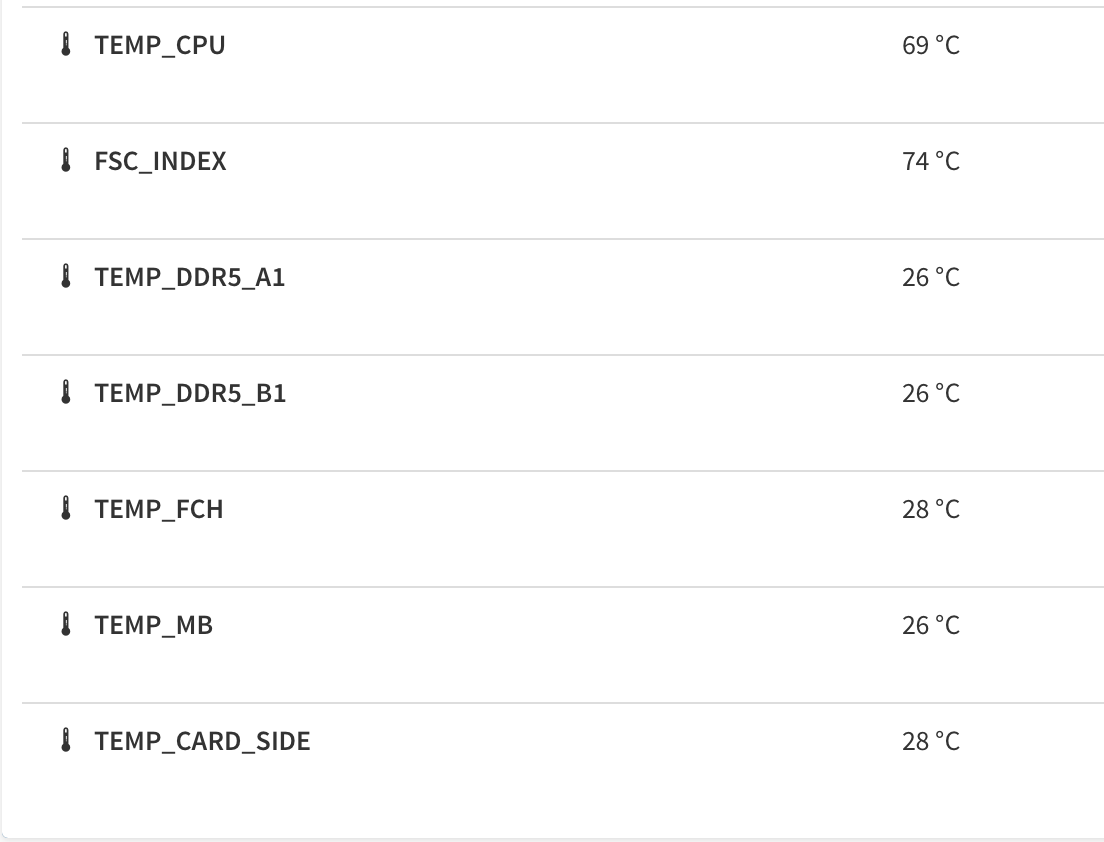
Final temperature readings from the motherboard - CPU at 69°C, FSC_Index at 74°C.
We called in the CTO and CEO.
The Moment
They walked in.
I stood by the lab table. Heart pounding.
The CEO circled the box. Slowly. Examining it from every angle.
The hum of the fans was barely there. Just a soft whisper compared to the jet engine it used to be.
He stopped.
Looked straight into my eyes.
Didn't say a word.
Then he extended his hand.
I shook it.
His grip was firm. His smile was the biggest I'd ever seen from him.
"It works."
Two words. That's all he said.
The CTO stood behind him, staring at the box, shaking his head.
"This is unbelievable. Thank you."
My heart exploded.
I wanted to scream. Run. Laugh. Do a backflip.
But I didn't.
I walked to my desk. Adjusted my chair so the back reclined all the way down.
And I just lay there.
Staring at the ceiling.
What a day.
What This Taught Me
A lot of this project was painful.
Reading endless documentation about aerodynamics.
Trying stupid ideas that failed.
Measuring the same thing 30 times.
But here's what I realized:
Every failed attempt was part of the process.
The dumb solutions? They eliminated what didn't work.
The research rabbit holes? They gave me the knowledge I needed.
The frustration? It made the success feel real.
I walked into this project thinking, "I'm a software engineer. This isn't my job."
I walked out realizing that problems don't care about your job title.
They just need someone curious enough to solve them.
What's Next
This was version 2 of the duct.
I'm already planning version 3. More vanes. Smoother edges. Better enclosure.
The CEO even bought a 3D printer for the office now.
So more innovations coming.
But for now - this is where the aerodynamics journey ends.
If you have questions, reach out. I'll try to answer everyone.
Keep learning.
Keep growing.
Keep building.
Till Next Time!
George Babakhanov
Student for Life
Credits & Resources
- OnShape - The Fastest Growing CAD & PDM System Worldwide. Free online CAD tool I used to create the 3D model.
- DigitMakers - The company that 3D printed the first prototypes for the duct.
- Decibel X App - The app used to measure sound levels.